Category guide · Published March 19, 2026 · Updated August 30, 2026
Employee Wellness Software & Corporate Wellness Tracking
Compare the operating models behind employee wellness, engagement, performance, and recognition platforms, then price the complete program, define the data boundary, and test whether the reporting can support a real decision.
Reviewed by HR Stack Solutions. This guide uses public vendor documentation and does not claim hands-on product testing.
Direct answer: Employee wellness software helps employers deliver challenges, education, incentives, resource navigation, and program reporting. Engagement platforms measure sentiment; performance suites connect feedback to talent workflows; recognition platforms manage appreciation and rewards. Choose the category that owns your operating job before comparing vendor scores or prices.
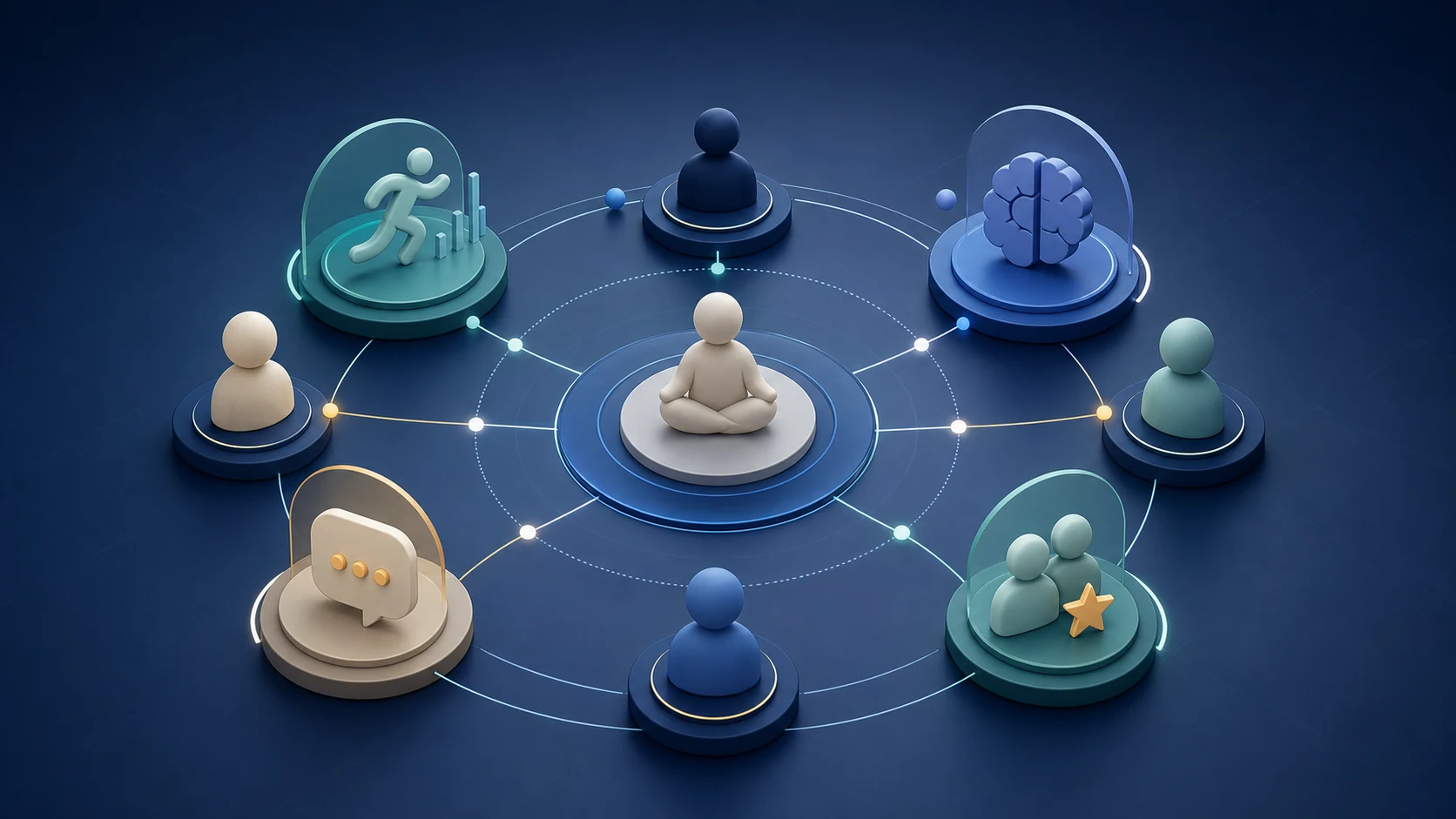
Corporate Wellness Program Software vs. Employee Engagement Tools
The category is easy to misbuy because adjacent products use similar language. A wellness challenge platform can report participation but may not run an anonymous listening program. A pulse survey can reveal sentiment but may not deliver health content or incentives. A recognition system can reinforce culture without being a wellness or performance system.
| Software Model | Primary Workflow | Choose It When |
|---|---|---|
| Corporate wellness program software | Challenges, education, activities, incentives, participation, and program reporting | The employer is operating a structured physical, mental, financial, or social wellness program. |
| Employee engagement platform | Pulse and custom surveys, anonymous feedback, benchmarks, action plans, and sentiment trends | Leaders need a repeatable listening system and a manager workflow for closing the feedback loop. |
| Performance and engagement suite | Reviews, goals, check-ins, feedback, manager routines, and optional engagement surveys | The buyer wants engagement data connected to performance and talent workflows. |
| Recognition and rewards platform | Peer recognition, values, milestones, rewards budgets, incentives, and participation analytics | The primary problem is appreciation, connection, or consistent reinforcement of company values. |
| Benefits navigation or clinical service | Benefit discovery, care navigation, coaching, EAP, or clinical support under a defined service model | Employees need health or benefits support, not another survey, challenge, or recognition feed. |
Employee Wellness and Engagement Platforms to Compare
These five examples retain the page's original order and are not a universal ranking. They represent different operating models, so compare only the modules and workflows that fit your program.
| Platform | Model | Published Price Signal | Primary Use Case | Verify Before Buying |
|---|---|---|---|---|
| 15Five | Engagement and performance suite | Engage $4, Perform $11, or Total Platform $16 per user/month, billed annually | Teams connecting engagement surveys with performance, goals, check-ins, and manager workflows. | Which plan contains the survey, performance, manager, and analytics workflows you actually need. |
| Lattice | Performance, goals, and engagement suite | Engagement $4, Performance $10, Goals & OKRs $8, or Foundations $13 per seat/month | Organizations that want modular performance, goal, engagement, growth, and compensation tools. | The $4,000 annual minimum, annual billing, selected modules, add-ons, and required integrations. |
| Wellable | Corporate wellness program platform | Population-based pricing; the current default example shows $625/month ($1.25 PUPM), with a 25-user minimum and implementation fee | Employers running wellness challenges, content, rewards, device integrations, and program reporting. | Eligible-user count, included content and services, rewards budget, spouse access, SSO, and implementation scope. |
| Officevibe | Employee engagement and pulse surveys | Workleap Standard starts at $4,999 USD annually; Pro starts at $11,999 USD annually; Enterprise is custom | Teams collecting pulse and custom surveys, anonymous feedback, engagement trends, and recognition signals. | Survey cadence, anonymity thresholds, manager access, reporting exports, and the exact Workleap package. |
| Bonusly | Peer recognition, rewards, and culture insights | Free up to 8 users; Team $5 per user/month with Bizy AI or $3 without; Organization custom | Companies formalizing peer recognition, milestones, rewards, participation, and culture reporting. | Annual subscription, rewards spend, budget controls, HRIS provisioning, SSO, and analytics depth. |
Vendor-published pricing checked August 30, 2026. Taxes, implementation, rewards, usage, minimums, annual commitments, optional modules, and negotiated terms can change total cost.
What Should Corporate Wellness Tracking Software Measure?
Build the reporting plan before buying the platform. A useful dashboard defines each denominator, shows when the roster last synced, and separates participation from outcomes. More challenge completions do not by themselves prove better health, productivity, satisfaction, or retention.
Reach
Eligible employees, invited employees, activated accounts, and access by location, shift, or worker type.
Participation
Active users, challenge joins, content starts, completions, repeat participation, and participation frequency.
Program delivery
Campaign launches, communications delivered, live-event attendance, coaching use, and unresolved support cases.
Incentives
Eligibility, earned rewards, redemptions, unclaimed value, budget utilization, and exception handling.
Employee feedback
Survey response, aggregate sentiment, comments, manager follow-up, action owners, and action closure.
Data quality
HRIS roster freshness, duplicate accounts, terminated-user access, integration failures, and reporting lag.
How to Choose a Wellness Engagement Platform
Define the operating job
Decide whether you are buying a wellness program, listening system, performance suite, recognition platform, or benefits service.
Set the privacy boundary
Document what individual data is collected, who can see it, when reporting is aggregated, and whether the program sits inside a group health plan.
Map eligibility and access
Test hourly, remote, frontline, international, leave, spouse, and non-desk populations before assuming one login flow fits everyone.
Price the whole program
Include minimums, eligible users, implementation, content, live services, rewards, integrations, support, and renewal terms.
Script the integrations
Test hires, terminations, team changes, SSO, HRIS sync, communication channels, rewards funding, exports, and failure handling.
Pilot and measure
Set baseline participation and process measures, run a representative pilot, and define who acts on the results before scaling.
Privacy and Health-Data Boundary
Do not assume every workplace wellness dataset is covered by HIPAA. HHS explains that individually identifiable health information collected through a wellness program offered as part of a group health plan can be protected health information, while a program offered directly by an employer and outside the plan may not be protected by HIPAA. Other federal or state laws can still apply.
Before launch, document whether the employer receives individual or aggregate data, the minimum reporting cohort, access roles, retention period, employee notice, consent, accommodations, incentive rules, and the process for legal and privacy review. A vendor's security page does not define the employer's legal responsibilities.
Employee Wellness Software RFP Tests
Ask vendors to demonstrate your workforce, privacy rules, and data definitions. A polished generic demo does not prove the implementation, anonymity, integration, or reporting behavior you will receive.
| Requirement | Evidence to Request | Scripted Test |
|---|---|---|
| Program configuration | Program templates, eligibility rules, content catalog, incentive controls, and communication plan | Configure one real campaign for two employee populations and trace every admin step. |
| Participation reporting | Metric definitions, data latency, cohort filters, exports, and treatment of inactive users | Reconcile invited, activated, active, completed, and rewarded counts from a sample roster. |
| Survey anonymity | Minimum cohort thresholds, comment rules, access roles, suppression logic, and raw-data policy | Run a small-team scenario and confirm what each employee, manager, and administrator can see. |
| Privacy and security | Data map, retention, subprocessors, encryption, access controls, audit logs, and deletion workflow | Trace health, survey, identity, and rewards data from collection through export and deletion. |
| Workforce access | Mobile and web support, language options, accessibility, spouse access, and non-email enrollment | Complete the workflow on a phone and with a frontline employee who lacks a company inbox. |
| Implementation and support | Project plan, staffing, service levels, launch support, escalation path, and renewal ownership | Assign owners and acceptance criteria for roster, SSO, communications, reporting, and launch. |
Frequently Asked Questions
What is employee wellness software?
Employee wellness software helps employers deliver and measure wellness programs such as challenges, educational content, activities, incentives, benefits navigation, and participation reporting. Engagement, performance, and recognition tools are adjacent categories and should not be treated as automatic substitutes.
What is the difference between wellness and engagement software?
Wellness software usually operates programs and tracks participation. Engagement software collects employee feedback through pulse or custom surveys and supports action planning. Some vendors cover both, but buyers should verify the exact workflow, data boundary, and contracted module.
How much does employee wellness software cost?
Pricing can be per eligible user, per active user, per seat, or a population-based subscription. The total budget may also include a contract minimum, implementation, rewards, live services, content, SSO, HRIS integrations, and support. The five examples on this page range from published per-seat plans to population estimators and custom quotes.
What should corporate wellness tracking software measure?
Useful reporting covers reach, account activation, participation, completion, repeat use, resource usage, incentive eligibility and redemption, employee feedback, manager follow-up, integration freshness, and support exceptions. Participation data alone does not prove a health, retention, or productivity outcome.
Can an employer wellness platform collect health information?
Some programs collect health-related information, but the legal and privacy treatment depends on how the program is structured. HHS explains that a program offered through a group health plan can involve HIPAA-protected information, while a direct employer program may fall outside HIPAA even though other laws can still apply. Employers should define the data boundary and obtain qualified legal and privacy review.
Which employee wellness platform is best for a small company?
Start with the narrowest operating job. A small employer may need a simple pulse survey or recognition workflow rather than a full wellness program. Compare minimum spend, user minimums, annual terms, implementation effort, mobile access, privacy thresholds, and the internal owner who will act on the data.
Related HR Software Guides
Primary Sources
Product, pricing, and public-agency sources were checked August 30, 2026. Validate the final vendor proposal, contract, data map, and applicable requirements before purchase or launch.
- 15Five official product or pricing page
- Lattice official product or pricing page
- Wellable official product or pricing page
- Officevibe official product or pricing page
- Bonusly official product or pricing page
- HHS: HIPAA privacy and workplace wellness programs
- CDC workplace health program planning and evaluation model